Food 4 Life

Food 4 Life Global pantry

Food for Life Global pantry is a Christian humanitarian organization that promotes disaster relief with support services and advocacy food for Life Global Pantry brings food assistance directly to those who are in need including children seniors Working Families no one has to go hungry. Our Hunger relief programs are uniquely organized with the communities we serve locally and internationally with food for 4 Life Global pantry We Fight Hunger by gathering and distributing food engaging in Partnerships that advanced self-sufficiency and by providing Community leadership on issues related to hunger.

Food 4 life Global pantry brings food assistant directly to those who need it including children seniors Working Families no one has to go hungry.

What is Hunger?

“Hunger” is an evocative word. Everyone understands what it feels like to be hungry. Our stomachs start rumbling. We get irritable. It becomes hard to think straight. To make those symptoms go away, we eat something. Our stomachs are full, and we are content.

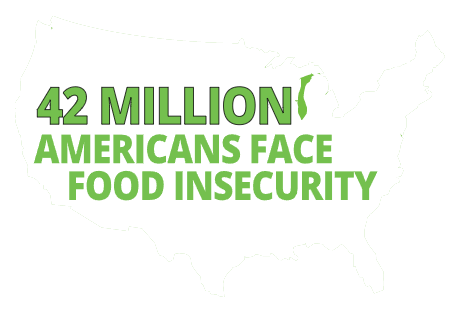
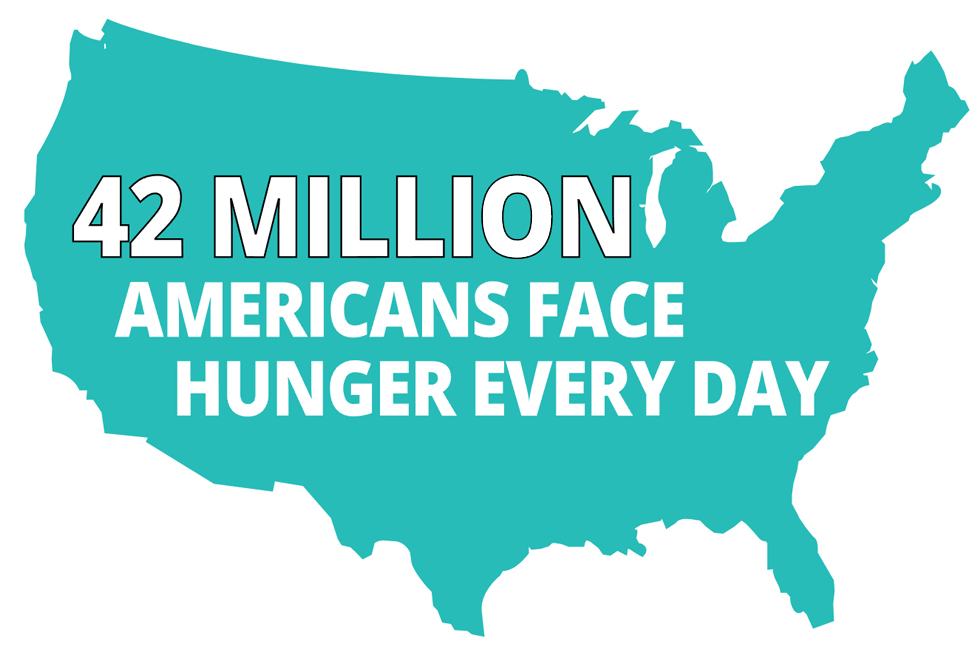
Over 42 million Americans face hunger each and every day including 1 in 6 children. If we think about hunger as most of us experience it, as a temporary sensation, the solution to this problem is straightforward: we just need to get more food to people who don’t have enough.

Food banks, shelters, and soup kitchens may seem like the answer to hunger in America. They are, however, a short-term and inadequate response. There has been a stunning increase in the number of emergency food programs over the last 40 years. In 1980, there were about 2 dozen food banks in the United States.

Today, there are more than 350, which serve 63,000 affiliated pantries and shelters. The growth of the emergency food system, however, has failed to solve “hunger.” Despite a spike during the Great Recession and a recent trend downward as the economy has recovered, the prevalence of food insecurity has remained relatively constant over the past 25 years. 11.1% of households were food insecure in 2018, which is only slightly below the 11.9% rate that was recorded in 1995, the year the federal government started keeping statistics.

Defining the problem as “hunger,” as Janet Poppendieck contends, “has directed our attention away from the more fundamental problem.”

“Hunger” is best understood as a symptom of the larger issues of poverty and inequality. It needs to be addressed through a combination of economic and political solutions.

If we want to solve hunger once and for all, we need to reduce the need for emergency assistance that food banks provide.

Why Are People Hungry?

According to Feeding America, 72% of the households served by its affiliated food banks live at or below 100% of the federal poverty line and have a median annual household income of $9,175. In short, they don’t have enough money to consistently put food on the table. While unemployment is certainly a significant factor, 54% of the households Feeding America serves had at least 1 person employed in the past year.

of the households served by its affiliated food banks, have a median annual household income of

$9,175

In fact, most Americans are working harder than ever, but are still struggling to make ends meet. Income inequality has, by almost any measure, increased exponentially over the past 30+ years. Since 1980, most of the growth in wages has been concentrated among top earners, while wages for the average worker have stagnated.

More people than ever are enrolling in college to try and secure their future, but the ballooning cost of higher education means that most students will take on a sizeable amount of debt. The median student loan debt now stands at $17,711, an increase of 21% since 2010.

Meanwhile, the cost of housing and healthcare have continued to outpace incomes. The average person would need to make $22.96 per-hour to afford a modest 2-bedroom apartment – more than 3x the federal minimum wage. There are only 28 counties in the entire United States where a worker earning the minimum wage could afford to rent a one-bedroom home. The average worker also pays $440 per month for healthcare coverage, a number that jumps to $1,168 for family plans.

On top of that, the cost of the average meal increased from $2.94 to $3.02. In some areas, however, the cost per meal is nearly twice the national average. For households that are often forced to choose between eating and paying the utility bills, every dollar counts.

IF WE WANT TO SOLVE HUNGER ONCE AND FOR ALL, WE NEED TO REDUCE THE NEED FOR EMERGENCY ASSITANCE THAT FOOD BANDS PROVIDE.

Who’s Hungry?

Although hunger affects every community in the United States, some groups of people are more vulnerable than others. African Americans are two times more likely to be food insecure than white, non-Hispanic households. Senior citizens are the fastest-growing food insecure population in the United States. One in 4 veterans of the Iraq and Afghanistan wars is food insecure. And a growing body of research shows that the number of college students facing hunger is skyrocketing.

The Impact

The negative costs extend far beyond individual households. A nation that allows 13% of its citizens to go hungry cannot achieve its full potential.

For starters, food insecurity among children has been linked to poor academic performance. According to No Kid Hungry, 80% of teachers said that they have seen students lose the ability to concentrate because they are hungry. Nearly 60% of children from low-income families say they have come to school on an empty stomach. The long-term consequences of sending kids to class hungry are substantial. Children who experience food insecurity in kindergarten fall behind and tend to stay behind.

Nearly 60% of children from low-income families say they have come to school on an empty stomach.

Food insecurity can also lead to a host of health problems. People who are hungry are 2.9x more likely to be in poor health and are more susceptible to chronic conditions like diabetes. Food insecurity has also been linked to higher rates of obesity among both adults and children. Low-income households are more likely to be uninsured and have to pay for the extraordinary costs of healthcare out of their own pockets, which drives them even deeper into poverty.

If millions of children can’t learn because they haven’t eaten breakfast, we are squandering the future of the next generation. If we consign illness onto an entire class of people, we are denying them their opportunity to succeed. Hunger is not simply an obstacle to be overcome, it’s a formidable barrier to a person’s, and, by extension, our country’s prosperity.

About Food Waste

Have you ever let a piece of fruit grow moldy in your refrigerator, simply because you forgot it was there? Have you ever thrown away a can of soup because it was past the “best by” date stamped on the label? Did you ever wonder what happens to all of the produce in the supermarket that goes unsold, or what your favorite restaurant does with all of their leftovers at the end of the day?

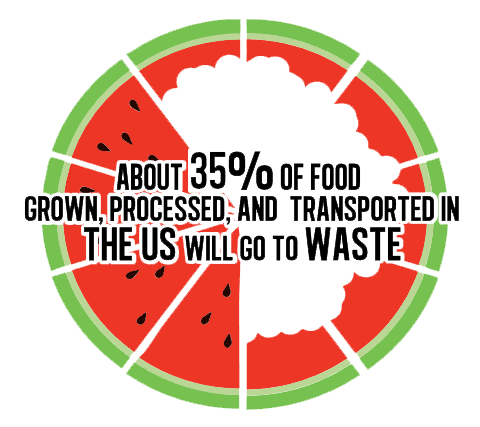
It goes to waste, along with 35% of the food in the United States that goes unsold or uneaten.

It’s hard to believe that, in a country where more than 42 million people face hunger every day, so much food could go uneaten. Yet, this is precisely what is happening – and we’re all partially to blame. Perfectly good food is being wasted at every level of the supply chain: on the farm, during distribution, at the store, and in our homes. In addition to the enormous humanitarian cost, our food waste epidemic is also an economic and environmental catastrophe.

Food is being wasted at every level of the supply chain

THE Life of a Strawberry

The Ad Council and the NRDC present a look at one strawberry’s journey from the farm to the trash can.

The Humanitarian Cost

What does it say about us that we’re willing to let millions of pounds of nutritious fruits and vegetables rot when so many people are hungry? According to The National Resource Defense Council, if we were able to rescue just 15% of the food we waste, we’d save enough to feed 25 million Americans each year. ReFed believes that by implementing food recovery solutions, we could provide 1.8 billion meals to people who are in need.

BY IMPLEMENTING FOOD RECOVERY SOLUTIONS WE COULD BE DONATING 1.8 BILLION MEALS EVERY YEAR TO PEOPLE WHO ARE IN NEED.

The Economic Cost

Wasting food is a waste of money. According to ReFed, American consumers, businesses, and farms spend $218 billion, or 1.3% of our gross domestic product, growing, processing, and disposing of food that is never eaten. Businesses are taking $74 billion loss on food waste every year.

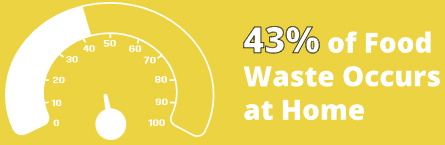
Most of the waste, however, is happening in our own kitchens. ReFed’s research shows that 43% of food wasted by weight – 27 million tons every year – occurs at home. American consumers are spending $144 billion dollars each year on food that they ultimately just throw in the trash.

Expired? Food Waste in America

How misleading labels contribute to food waste.

The Environmental Cost

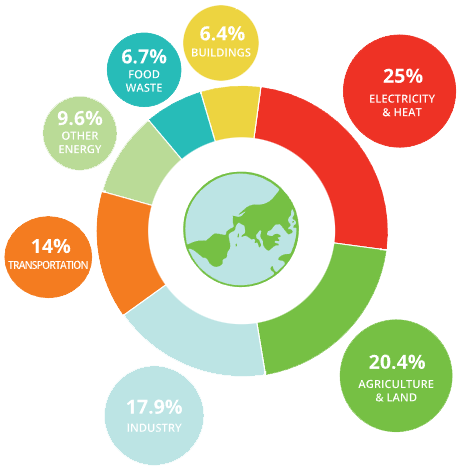
Equally troubling is what this absurd amount of waste is doing to our environment. A report from the United Nations’ Food and Agriculture Organization estimated that the carbon footprint of food waste was 7% of all global emissions. A recent study by the Potsdam Institute for Climate Impact Research showed that more than 20% of all greenhouse gas emissions are produced by agricultural activities. To waste so much food, then, is to needlessly contribute to climate change. Not to mention the resources we are squandering – 21% of all fresh water, 18% of cropland, and 19% of fertilizer – in the service of producing food that will only end up in the trash.

Speaking of trash, the Environmental Protection Agency points out that most of the material filling our landfills is organic matter, such as food waste. When that material gets buried in the dump, it decomposes anaerobically and releases methane, a greenhouse gas 25x more harmful than carbon dioxide. A report from the United Kingdom’s Food Waste Recycling Action Plan (WRAP) says that if food scraps were eliminated from landfills, the corresponding reduction in greenhouse gas emissions would be the equivalent of removing 20% of all the cars in the country from the road.

HUNGER AND HOMELESSNESS

Many people conflate hunger and homelessness. Although the issues are closely related, there are several important distinctions we need to be aware of. For starters, a person does not have to be experiencing homeless to be hungry. More than 42 million Americans are food insecure, meaning they don’t have access to an adequate supply of nutritious, affordable food.

According to the National Alliance to End Homelessness, over 580,000 Americans experienced homelessness on a single night in 2020. Hunger often precedes homelessness because people who are forced to decide between paying for housing or groceries will, more often than not, choose the former.

Both hunger and homelessness often have distinct causes and can have disparate impacts on different segments of the population. Let’s look at the facts!

Hunger & homelessness By state

Click a state on the map below for a snapshot of the number of people who are food insecure and experiencing homelessness.

SOURCES:
FEEDING AMERICA
NATIONAL ALLIANCE TO END HOMELESSNESS

ABOUT HUNGER

Hunger is best understood as a symptom of the larger issues of poverty and inequality.

Hunger Facts

Causes

  • Poverty – In 2020 over 37 million people lived in poverty. According to Feeding America, 72% of the households served by its affiliated food banks live at or below 100% of the federal poverty line. While unemployment is certainly a significant factor, nearly 60 percent of food-insecure U.S. households have at least one working family member. 72% of the households the Feeding America network serves live at or below the federal poverty level with a median annual household income of $9,175.
  • Income Inequality –  An estimated 40 percent of the total U.S. population (140 million people) are either poor or low-income. By almost any measure, income inequality has increased exponentially over the past 30+ years. Since 1980, most of the growth in wages has been concentrated among top earners, while wages for the average worker have stagnated.
  • Lack of Affordable Housing – There is not one state or county in the United States where a minimum wage, full-time worker can afford a two-bedroom apartment.
  • Food Deserts – Food Deserts are areas or neighborhoods where residents do not have access to a grocery store that provides the wholesome and nutritious foods that are necessary for a healthy diet.

ABOUT HOMELESSNESS

According to the National Alliance to End Homelessness, over 580,000 people experience homelessness on any given night in the United States,

Homelessness Facts

  • Chronic homelessness is the term given to individuals that experience long-term or repeated bouts of homelessness.
  • There are over 100,000 homeless individuals with chronic patterns of homelessness, equalling 27 percent of the total population of homeless individuals.
  • Since 2007, the number of individuals with patterns of chronic homelessness has declined 8 percent. However, between 2019 and 2020 this number increased by 15 percent.
  • Over 40,000 veterans are homeless on any given night.
  • 70% of the entire homeless population are men.
  • African Americans make up 13 percent of the general population, but more than 40 percent of the homeless population.

Causes

  • The lack of affordable housing is one of the biggest factors behind contributing to homelessness. In 2019, more than 45% of the 44.1 million renter households paid rent equal to 30% or more of their gross household income.
  • Poverty is the other major factor that contributes to homelessness. A lack of employment opportunities, combined with a decline in public assistance leaves low-income families just an illness or accident away from being put out on the street.
  • According to the National Low Income Housing Coalition, a family with a full-time worker making minimum wage could not afford fair market rent for a two-bedroom apartment anywhere in the U.S.
  • A renter earning the federal minimum wage of $7.25 per hour would need to work nearly 97 hours per week to afford a two-bedroom rental home or 79 hours per week to afford a one-bedroom rental home at the average fair market rent.
  • full-time worker needs to earn an hourly wage of $24.90 on average to afford a modest, two-bedroom rental home in the U.S.
  • Poor health is also closely linked to homelessness. 20% of the homeless population reported having a mental illness, 16% had conditions related to substance abuse, and thousands had HIV/AIDS, diabetes, or heart disease.
  • For many young people, single adults, and families, domestic violence is the primary cause of their homelessness.
  • On a single night in 2019, homeless services providers had more than 48,000 beds set aside for survivors of domestic violence.

The running issue of hunger and homelessness in America won’t go away without your help. With over 40 million food insecure Americans and 13 million food insecure children, it’s important to take as much action as we can to fight hunger.